research
Article
How we use AI responsibly as a creative agency
Disclaimer: This article reflects our stance today. As AI continues to evolve, so will our practice and these guidelines.
Overview
Key takeaways
- AI as a tool: AI is treated as a material (like a typeface or wireframe) to increase speed in research and exploration, not as a replacement for human creators.
- Combating sameness: Human taste and judgment are required to prevent the "convergence" and lack of differentiation caused by generic AI outputs.
- Transparency: Clients are always informed when AI tools are used in the research or ideation process.
- Human-led final work: No final assets (photography, videos, illustrations, or copy) are delivered without significant human refinement and approval.
- Data integrity: Confidential information is never fed into AI models, and AI is not used to mimic real people.
AI is a material, not a maker
At Greater, AI is part of our toolkit the same way a typeface is, or a wireframe, or a sharp brief. It helps us move faster through the parts of the process that benefit from speed, so we can move more slowly through the parts that demand care. We don't use AI to replace the creative people doing the work. We use it to protect the time and energy those people need to do their best work.
As we dive deeper into this practice, we realize the real risk isn't AI, it's sameness. Every individual, team, agency, and client now has access to the same models, the same generation tools, the same templates, and the same ability to create something “creative” in seconds. However, when everyone draws from the same well, the output converges. Brands start to look alike, sound alike, and feel alike. The market gets louder, but nobody stands out.
We believe differentiation is the most important creative problem of the decade, and it's because it should be a human task. Differentiation requires taste, judgment, and, most importantly, it requires someone who understands not just what a brand could say, but what it should say, and what it shouldn't.
That's the work we do, and it's human work.
Our commitments to human craft
- Transparent: We are transparent about where AI shows up in our process. If we use AI-assisted tools in research, ideation, or production, our clients know. And if they want to avoid AI, we respect that too.
- Private: Regardless of the choice, we will never feed AI with any confidential information, use it to generate images or voice cloning that mimics real people, or devalue our own human craft by generating final assets like logos or illustrations.
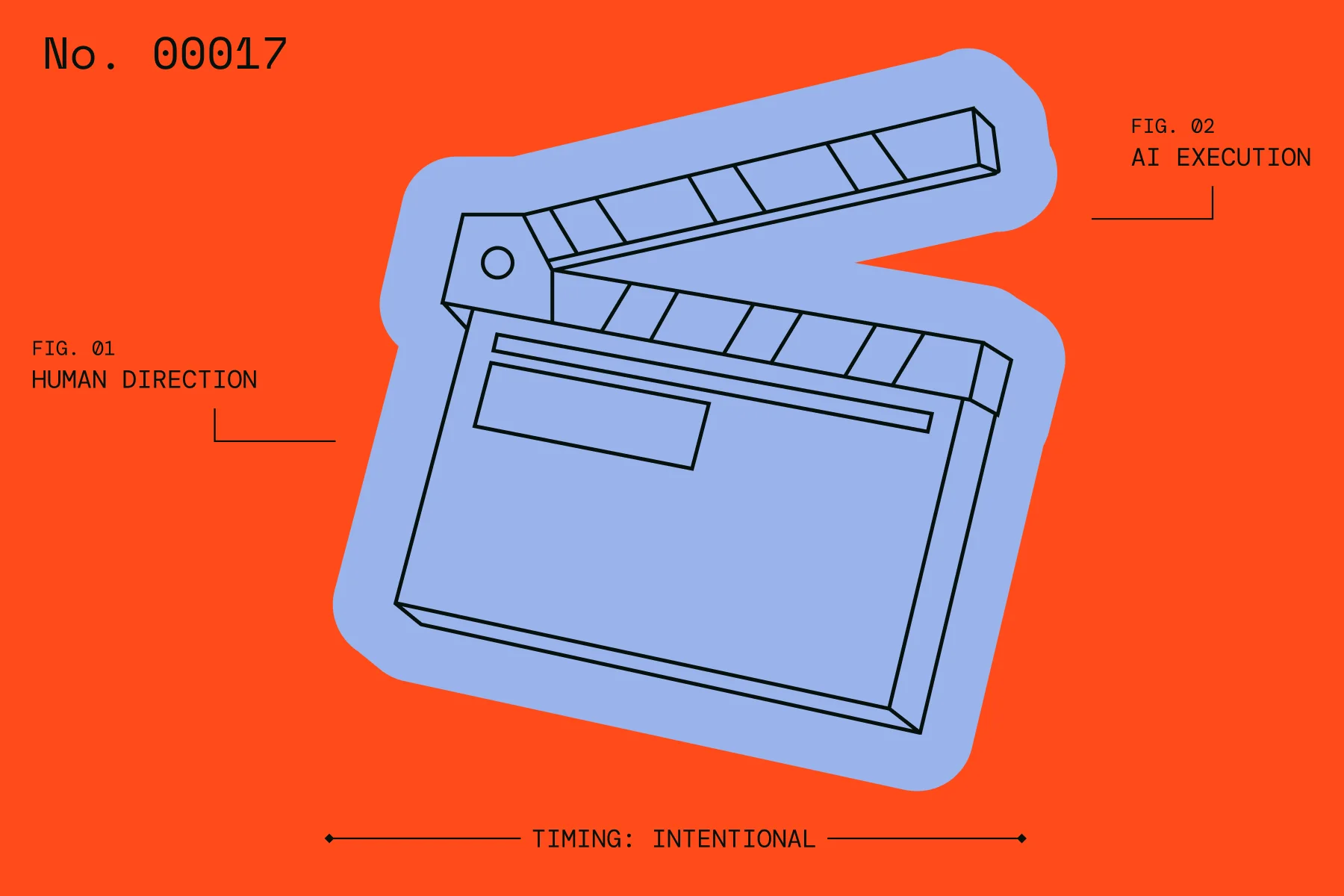
- Human-led: We never deliver AI-generated work as final output. Every concept, every design, every line of copy that ships has been shaped, refined, and approved by the people on our team. AI can help start a conversation, but it doesn't get the last word.
- Authentic: We invest in craft precisely because AI makes it rarer. As generated content floods every channel, the brands that invest in real creative thinking will be the ones people trust. We help our clients become those brands.
- Intentional: We evaluate new tools by what they protect, not just what they produce. The right tools give our team more room for the strategic and creative work that drives results. The wrong ones just create more noise. We know the difference.
The bottom line
When AI is used correctly, it makes creativity more valuable. Greater exists to help brands show up with authority, clarity, and originality in a market that's increasingly short on all three.

table of contents
Want more like this?
Subscribe to stay in the loop.
More content
Learn about other things on our mind




.svg)