Key takeaways
- Beyond visuals: A brand is defined by its core ideology, not just its logo or visual system.
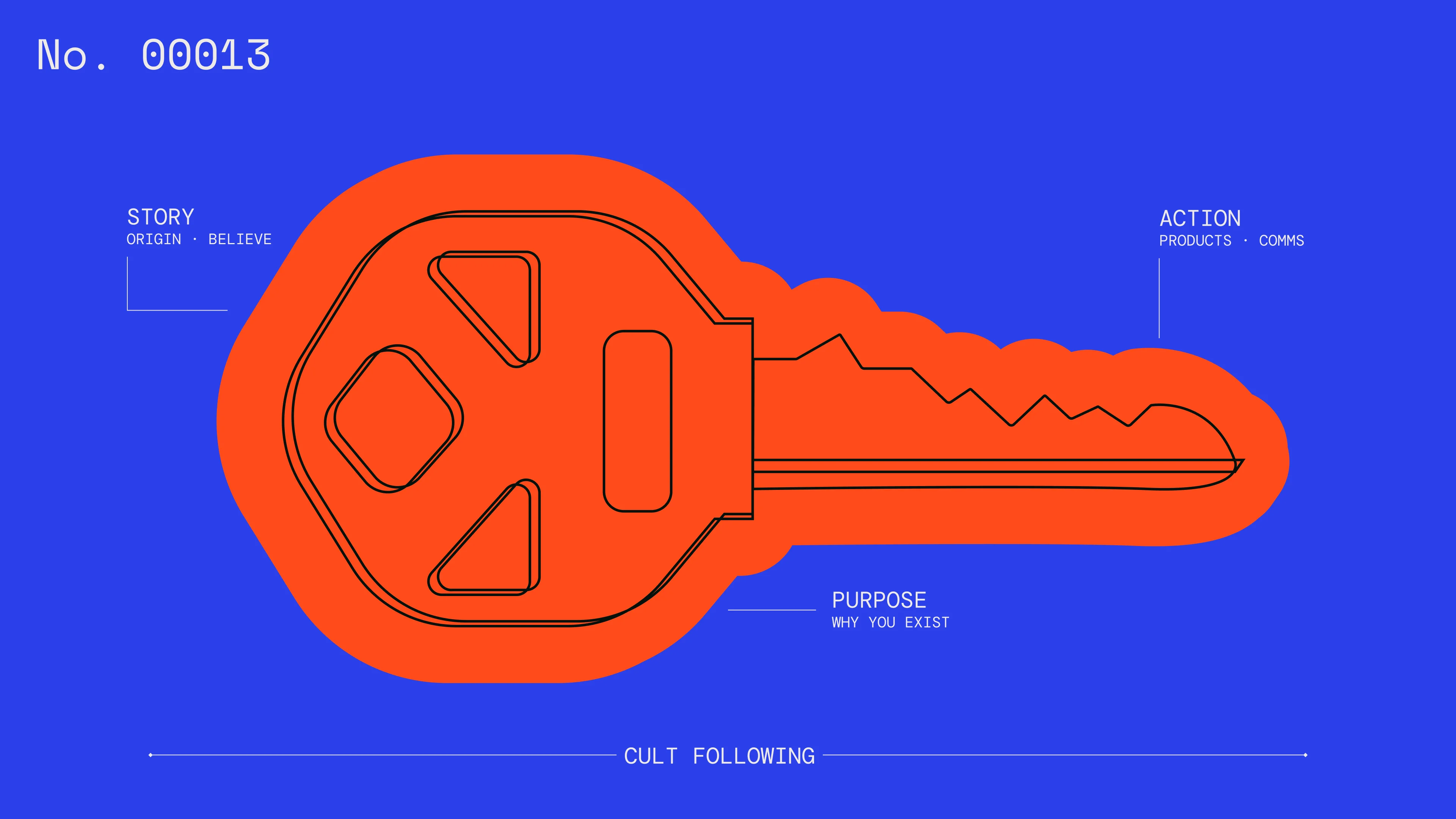
- The SPA framework: Success is built on the alignment of Story (origin), Purpose (why you exist), and Action (how you manifest).
- Emotional connection: Cult brands like Nike and Apple succeed by turning products into symbols of possibility and identity.
- Action alignment: A brand's purpose must be reflected in its products, distribution, and innovation to maintain trust.
- The risk of misalignment: Functional success without a clear, lived purpose leads to low customer loyalty (e.g., Uber).
This article explores the core ideology of brand vision adaptation, going beyond surface-level visuals to establish a structured foundation. This framework is essential for guiding all present and future decisions concerning both visual and verbal communication. The piece will dissect this framework, using practical examples to illustrate the importance and application of each step, ultimately demonstrating the results brands can achieve.
Introduction
If you're a creative or startup founder, you've probably heard the phrase, "Your logo is not your brand," a thousand times. The statement is true, but also an abbreviation of the full picture.
For many, crafting a beautiful logo and a visual system that works across touchpoints is what defines the brand. While that's necessary and very good, it's also just scratching the surface.
Here's the real test: Does your brand make people stop, remember, and care? This is a defining question that clearly separates the brand that lives on from its competition in any industry.
Most brands stop at the visual layer because it's tangible; you can see it, test it, and refine it. But visuals alone can't tell people why you exist, what you stand for, or what they should do next. This is where the value in starting with the framework comes in: you get the opportunity to build a cult following with every part of your brand.
Let's look at some cult brands to understand this framework in action.
Nike
In 1964, when Phil Knight and Bill Bowerman launched Blue Ribbon Sports (later renamed Nike), they looked like just another athletic shoe company. They sold running shoes to runners. Nothing about that seemed revolutionary, but there was more to them than that, and it started with how the founders saw what they were doing, and why it mattered.
Bowerman, who was an Oregon track coach, was completely obsessed with getting his runners to perform better, so obsessed that he poured rubber into a waffle iron to create soles with better grip.
"He thought running shoes could be better," Nike's first full-time employee, Jeff Johnson, says about Bowerman's early innovations. "He challenged accepted notions of traction, cushioning, biomechanics, and even of anatomy itself."
He and Phil Knight, one of his runners, really believed that sports could transform lives. Bowerman said, "If you have a body, you are an athlete"; this is the story part of their framework.
This led to a clear purpose, and with that clarity came the logo and even the popular tagline.
The connection
Story and purpose give you direction, and this manifests in both the visual and verbal aspects of the brand. The swoosh logo wasn't just a sleek, memorable, easy-to-reproduce shape. It was designed to represent the wing of Nike, the Greek goddess of victory, showing movement, speed, and momentum, but what makes it powerful isn't the visual alone, it's that the logo is rooted in Nike's story and purpose.
Without Nike's story that "if you have a body, you are an athlete," the swoosh is just a checkmark. "JUST DO IT" is a strong tagline because of its strong foundations.
The framework gave the logo its meaning, and that is what made it iconic. Now, how would a brand with such a strong story and a clear purpose of who they are do things to make sure their audience can relate to them on a deeper level?
The story
"If you have a body, you are an athlete"
The purpose
“We exist to inspire everybody to be an athlete”
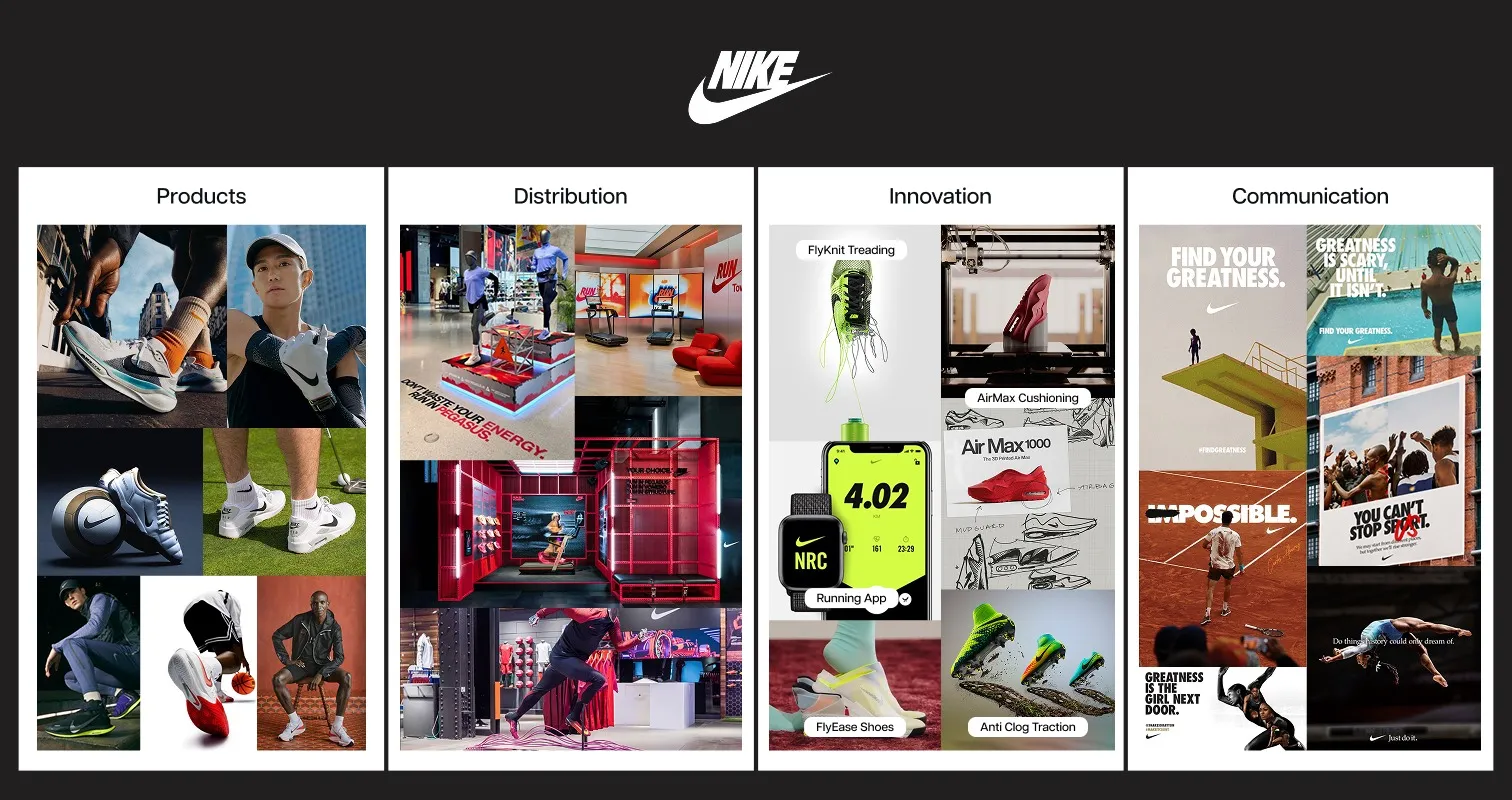
Here’s how Nike’s purpose drives action:
- Products: Accessible sport wearables that help everyone move from professional sport shoes to affordable everyday sneakers. Nike builds for everyone, not just elite performers.
- Distribution: Retail stores become full experiences, with spots that invite you to test, play, and engage your inner athlete.
- Innovation: Tools that make it easy for everyone to move. Nike invested in technologies like Air Max cushioning, Flyknit construction, and the Nike+ app ecosystem to remove barriers and enhance performance at every level.
- Communications: Evocative adverts that make you feel the message beyond the words. From "Just Do It" to campaigns featuring everyday athletes alongside professionals, Nike's messaging consistently reinforces that movement is for everyone, regardless of skill level.
Patagonia: Building a brand around environmental action
When Yvon Chouinard started making climbing gear in his blacksmith shop in 1957, he wasn't trying to build a business. He was solving a problem for himself and his friends. The pitons (climbing spikes) available at the time damaged the rock faces they loved, so he created reusable ones. That origin story became the foundation of everything Patagonia would become: A climber who cared more about preserving nature than making profit.
The story
We're climbers, surfers, and outdoor enthusiasts first, business second.
The purpose
"We're in business to save our home planet."
This isn't just a marketing tactic, it’s a brand living its purpose. In 2022, Chouinard gave away the entire company (worth about $3 billion) to a trust dedicated to fighting climate change.
Here's how their purpose drives action:
- Products: Durable gear designed to last, with lifetime repair guarantees.
- Distribution: Stores that feel like base camps and less like retail spaces. They also host environmental activism events.
- Innovation: They actively encourage you to buy used Patagonia gear instead of new.
- Communications: Ads that say "Don't Buy This Jacket" and campaigns that tell you to vote climate deniers out of office.
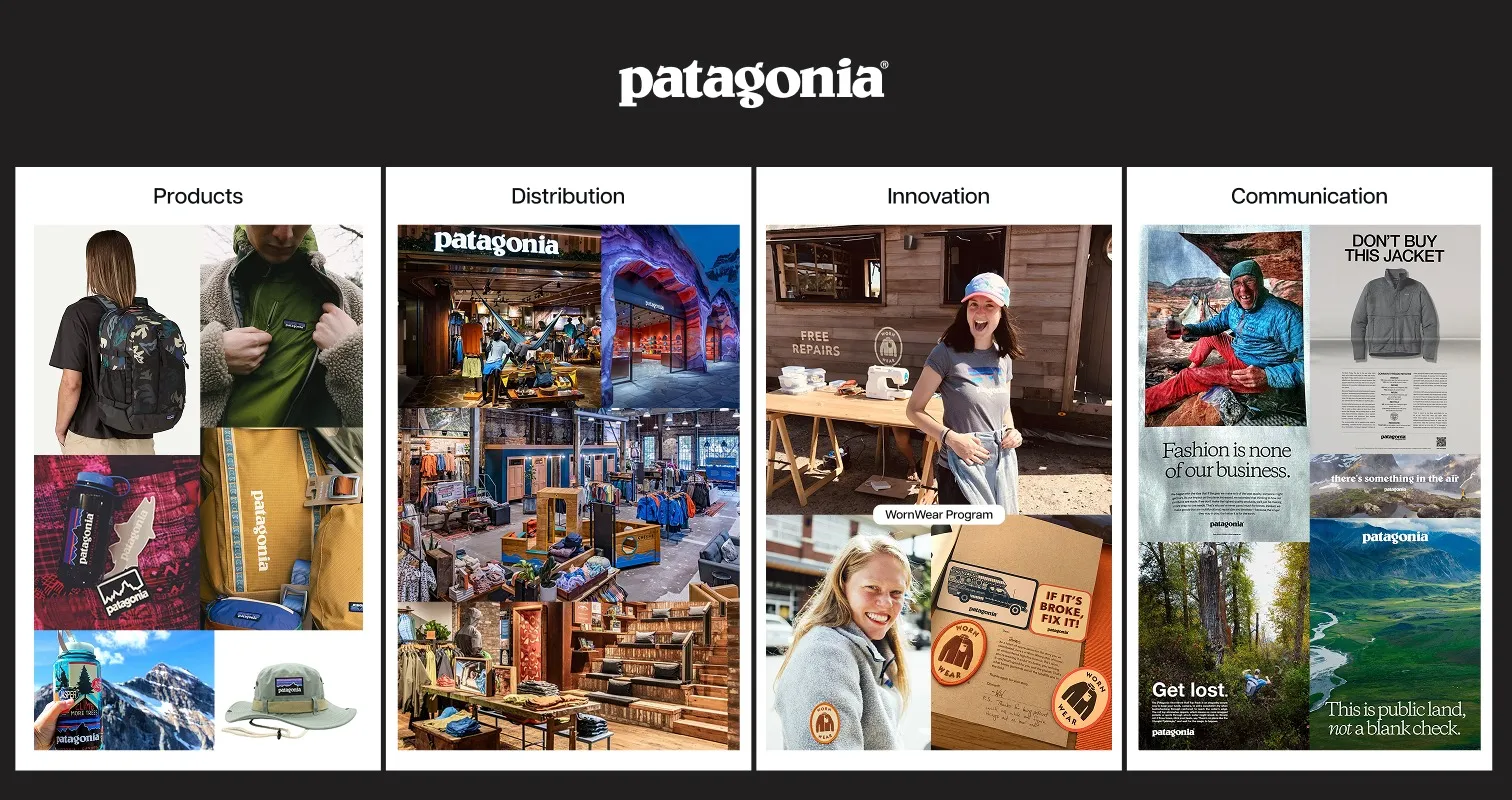
The brand lives on because customers aren't just buying jackets, they're joining a movement to protect the planet.
Apple: The brand for people who think differently
In 1976, Steve Jobs and Steve Wozniak built a computer in a garage. But that's not the story Apple tells. The story is about rebels, misfits, and people who see the world differently. It's the story of challenging IBM's dominance in the 1980s. It's the "1984" Super Bowl ad that positioned Apple as the antidote to corporate conformity. That’s why “Think Different” is still remembered, a campaign rooted in their story and purpose.
The story
We're the underdogs who challenge the status quo.
The purpose
To empower individuals to create, think, and change the world.
Apple doesn't sell technology. They sell tools for human potential. When they launched the iPod, the tagline wasn't "1GB of storage." It was "1,000 songs in your pocket." When they launched the iPhone, it wasn't about specs. It was about putting "The internet in your pocket."
Here's how their purpose drives action:
- Products: Intuitive tools that "just work." No manual required.
- Distribution: Apple Stores are designed like galleries where you experience the product, not just buy it.
- Innovation: They don't chase features. They focused on experiences (Touch screens, Face ID, AirDrop, Apple Pay, AirTags, Satellite Connectivity, and Heart Health Monitoring).
- Communications: "Think Different." "Shot on iPhone." Campaigns that inspire creation, not consumption.
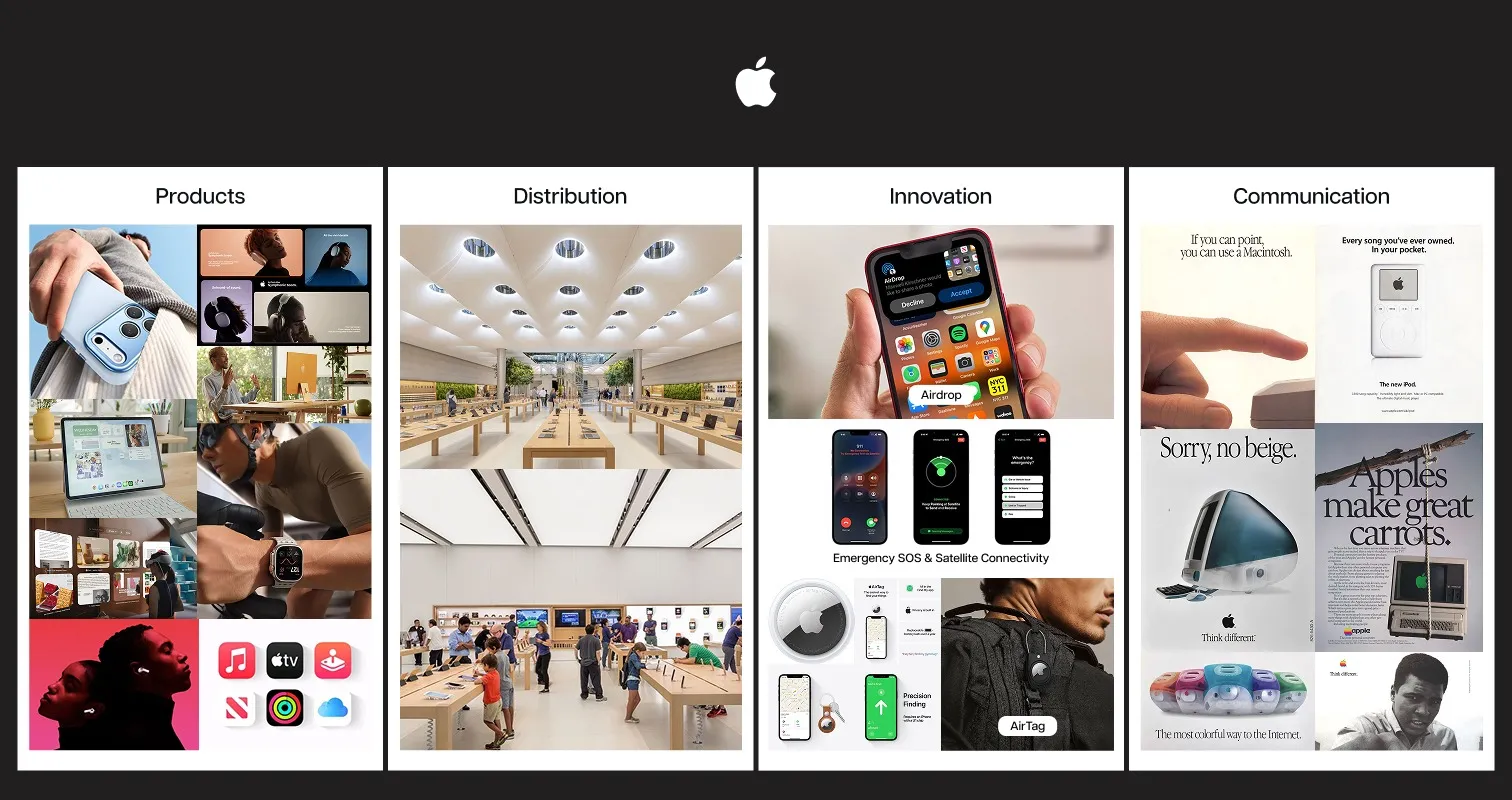
Apple customers don't just use iPhones. They identify with the brand. That's why the logo is on the back of the device, facing outward. It's a signal: I'm one of them.
Airbnb: Turning strangers into neighbors
In 2007, two designers in San Francisco (Brian Chesky and Joe Gebbia) couldn't afford rent. So they rented out air mattresses in their living room to attendees of a design conference. They called it "Air Bed & Breakfast."
The story
We started by opening our home to strangers. You can too.
The purpose
"Belong Anywhere." Breaking down the barriers between travelers and locals.
Airbnb didn't disrupt hotels by being cheaper (though that helped). They offered something hotels can't: human connection, the possibility of staying like a local.
Here's how their purpose drives action:
- Products: A platform that connects people, not just lists properties. Host profiles, reviews, and messaging create trust.
- Distribution: The platform itself is the distribution. Peer-to-peer, global, local.
- Innovation: Experiences (locals hosting activities), Airbnb Plus (verified quality), and community-driven safety features.
- Communications: "Don't go there. Live there." Campaigns that show real hosts, real homes, real connection.
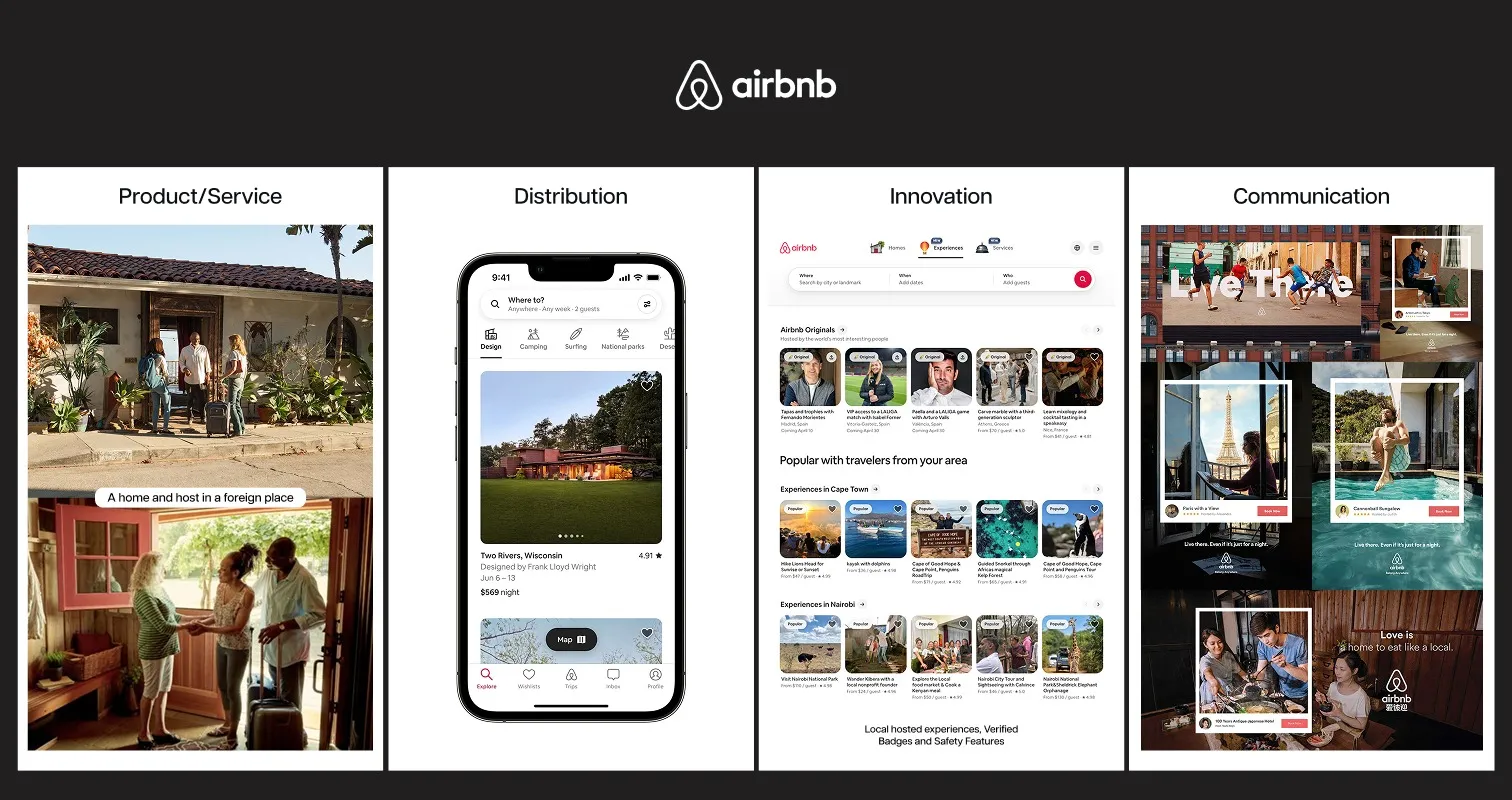
The brand lives on because it transformed travel from a transaction into a cultural exchange.
Uber
Not every brand gets this framework right, and Uber is a lesson in what happens when story, purpose, and action fall out of alignment.
Early Uber had a clear story: two friends couldn't get a cab in Paris, so they built an app that put a private driver in everyone's pocket. The purpose was simple: convenient, reliable transportation at the tap of a button.
But as the company scaled, the story became muddied. Aggressive expansion, driver treatment controversies, and regulatory battles overshadowed the original promise. The action (how they operated) didn't align with a purpose people could believe in.
The result? A brand people use but don't love. Uber is functional, but it's not a movement or an emotional connection. If a competitor offers the same service, customers switch without hesitation.
That's the difference between a brand built on Story, Purpose, and Action and one that's just built on product-market fit.
The takeaway
If you want your brand to outlive you and truly be accepted by its audience, you have to find your own version of this framework. Cult brands stay true to their brand through all touchpoints, including distribution, innovation, and communications.
table of contents
Want more like this?
Subscribe to stay in the loop.
More content
Learn about other things on our mind


.jpg)



.svg)