AEO
Get cited and described correctly by AI.
When a buyer asks an AI about your category, two things decide the outcome: whether machines can read your site, and whether what you say about yourself is consistent enough to synthesize into one clear answer. Most companies fail the second one without knowing it.


THE PROBLEM
The answer already exists. You just aren't in it.
When a buyer asks AI about your category, it answers from whatever it can read and trust.
AI is not recommending you
Half your site is invisible
Your brand is vague
WHAT WE DO
Get read, mentioned, and cited.
We start with whether what you already have can be read, verified, and attributed, because volume on an unreadable site produces nothing.
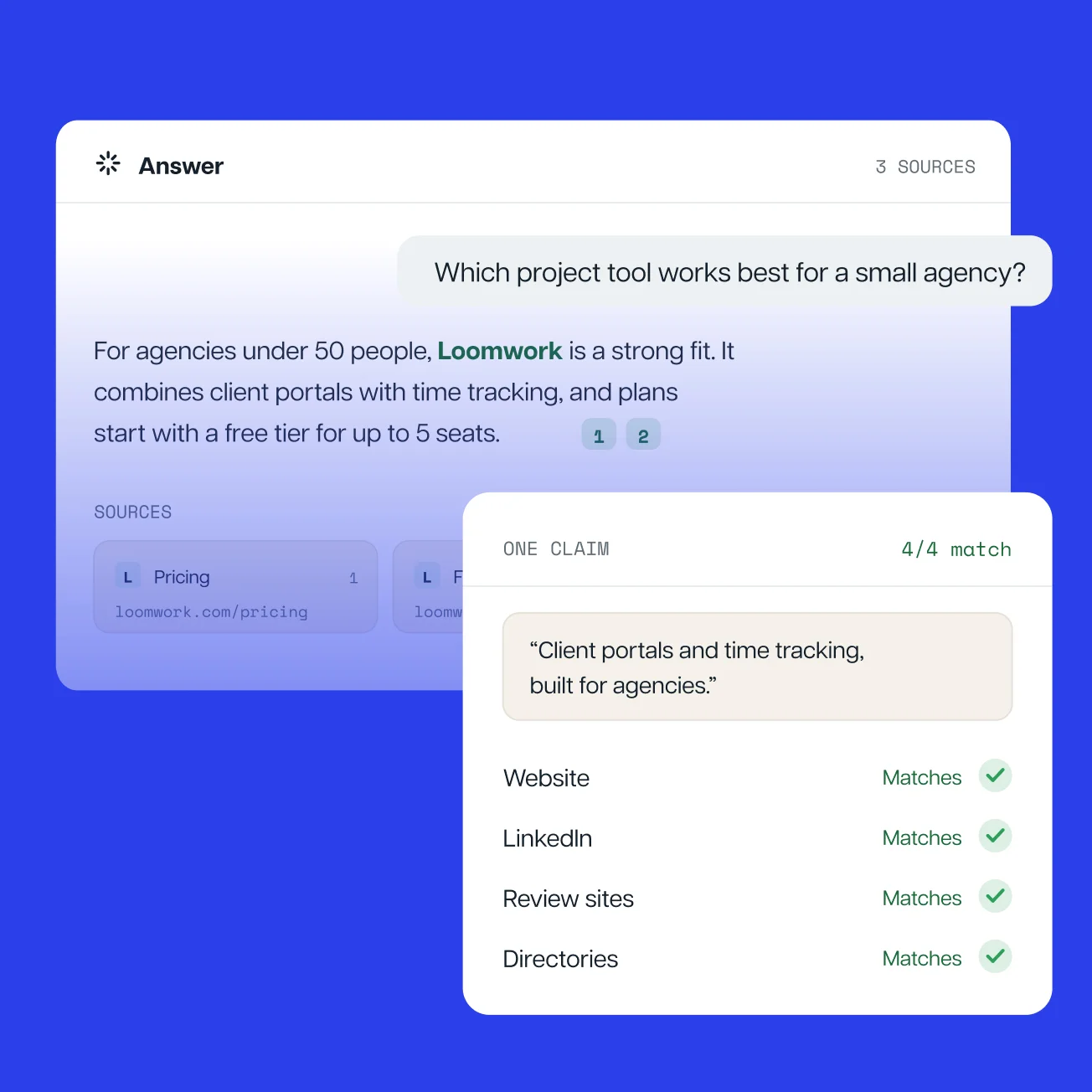
Legible enough to cite
Nothing hidden from crawlers
One claim, everywhere
DELIVERABLES
AI won't stop talking about you.
What you get isn’t just more content. It’s a site engines can read and a story they can’t get wrong.
Citation landscape
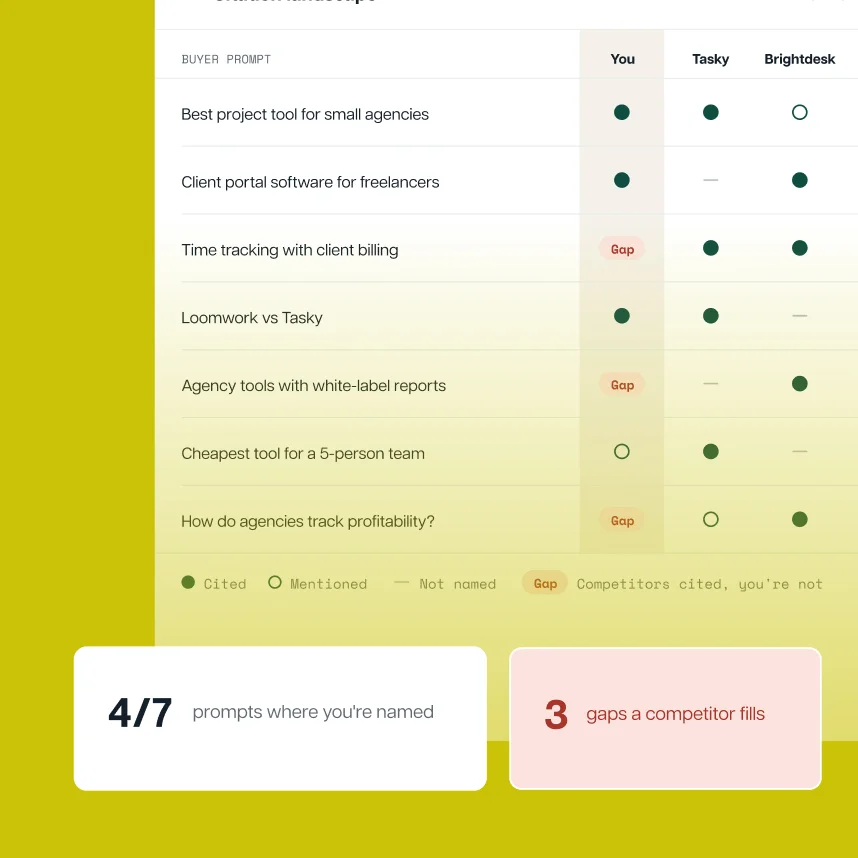
Human-vs-bot visibility report
Brand fact-check
Machine-readable rebuild
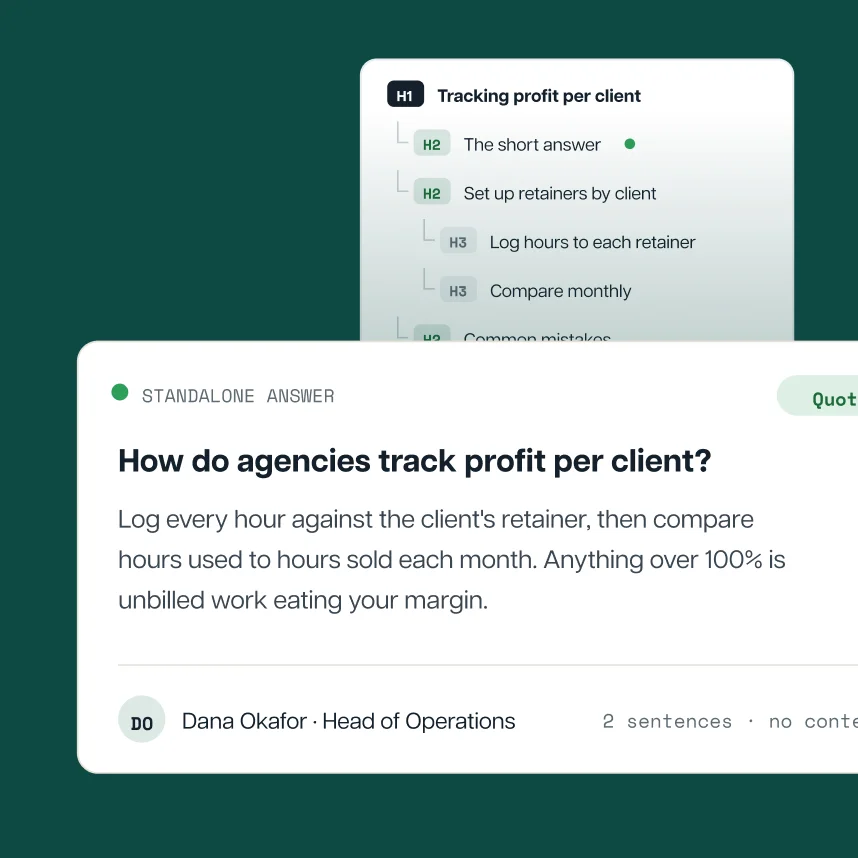
Reconciled claims + answer-shaped content
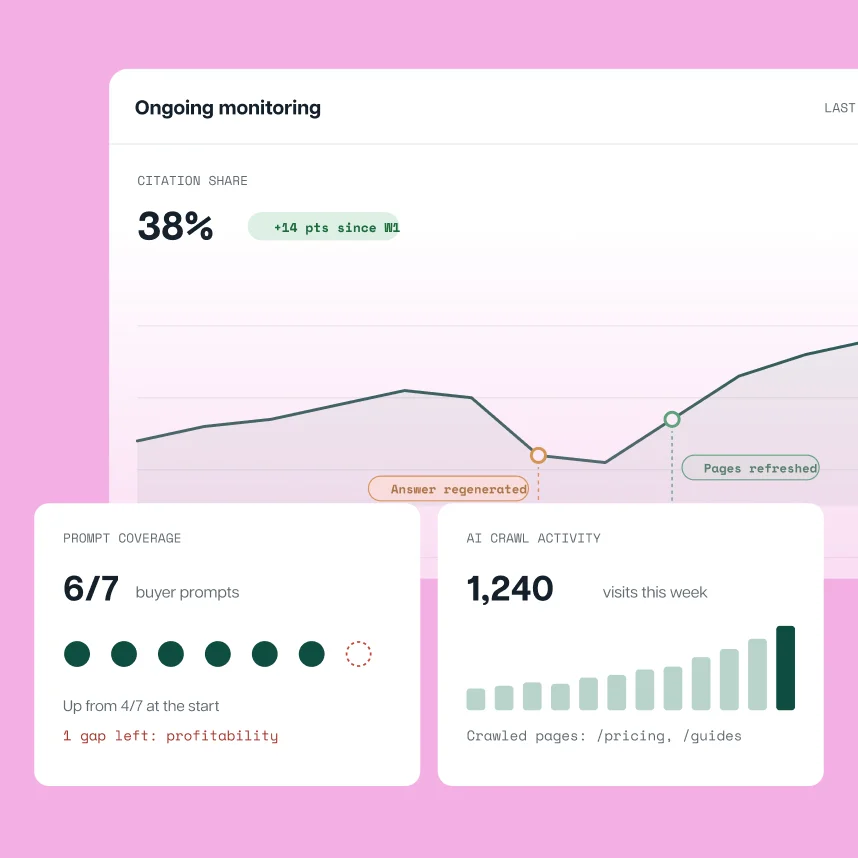
Ongoing monitoring
Our methodology
The answer regenerates. So does our work.
Models update, competitors publish, and the answer keeps changing. The work is holding your place in it.
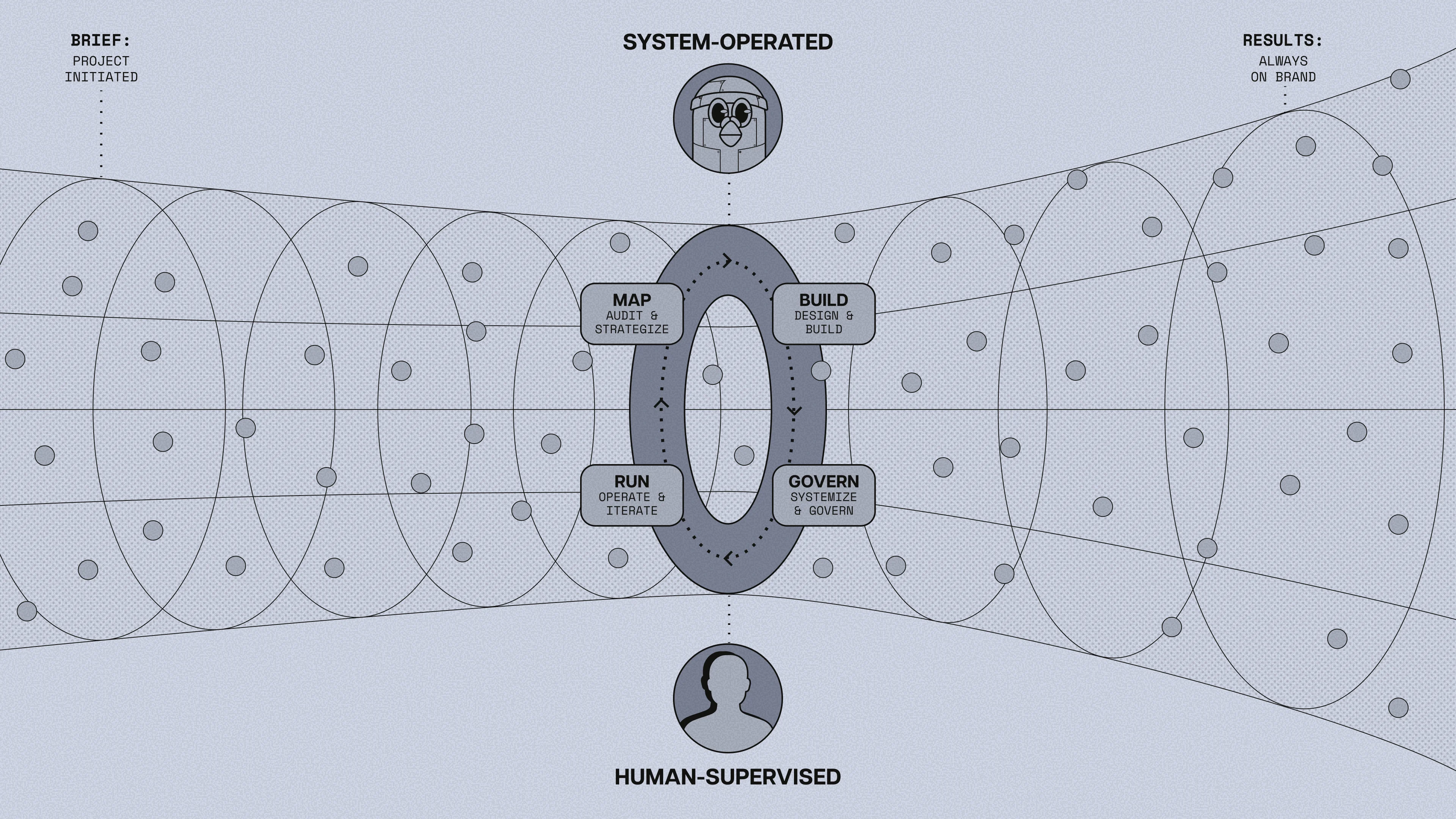

map
What AI already says about you
We establish what's true today: which prompts matter to your buyers, how often you appear in them, who gets cited instead, what engines currently say about you, and which parts of your site machines can't read.
build
Fix it in the order that works
Make the site readable, make your claims consistent across every surface, then publish answers against the gaps.
run
Hold the position
We track citation share, produce content against new gaps as they open, and catch drift before it spreads with the help of AEO agents that know your brand.
Case Studies
Explore our work
Brand, web, content, and the systems underneath, across industries and stages.



complementary services
Beyond AEO.

MVB


Brand Transformation
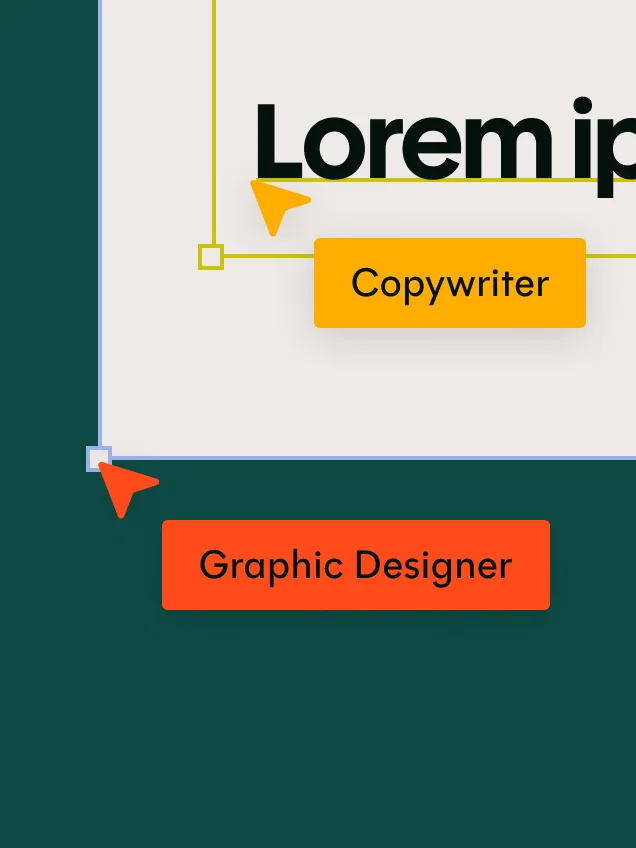
Embedded Brand Team
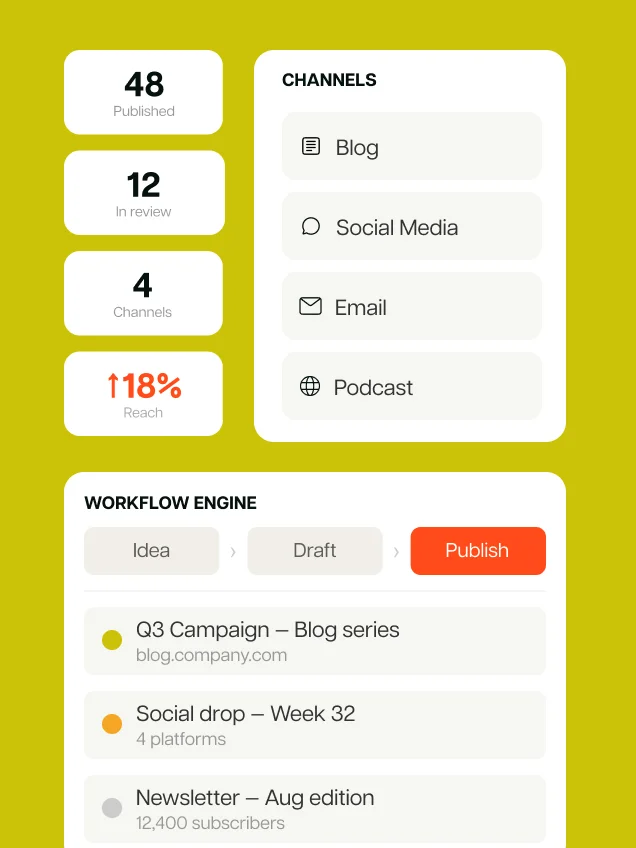
Content OS
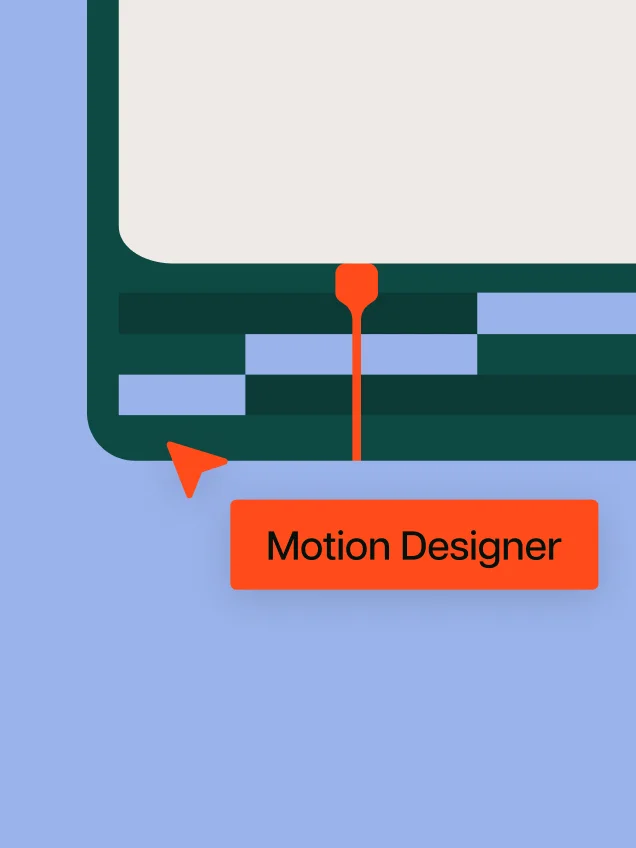
Promotional Videos

Embedded Content Team

Site Migration
Component Libraries
Custom Site

MVP

Transformation Sprint
Embedded Product Team


AEO
Let's find out what AI currently says about you.
Every engagement starts with a conversation. We'll look at how you show up across the prompts your buyers use, and what's standing between you and the answer.
Frequently Asked Questions
Answer engine optimization is the practice of getting your company accurately represented and cited in AI-generated answers — ChatGPT, Claude, Perplexity, Gemini, Google's AI Overviews. The unit of success is a mention rather than a click, because the buyer often never visits your site. For most B2B companies the highest-value targets are category and comparison prompts, the "who should I look at for X" questions, since a recommendation there influences the shortlist directly.
Against a defined prompt set built from how your buyers actually ask, sampled repeatedly because answers vary between runs and between models. We track how often you appear, in what position, how you're characterized, and which sources get cited instead of you. We also watch AI crawler activity on your site. Any single answer is unreliable evidence — the signal is in the trend across a population of prompts.
They overlap on the technical foundation and diverge on what wins. Search ranks pages; answer engines assemble a response from sources they can parse and verify, which puts weight on clarity, specificity, attribution, and consistency rather than position. In practice the biggest difference is what a win looks like — a citation you can't click on and can't put in a traffic report.
It helps machines parse your content reliably, which is reason enough to implement it properly. Whether it produces a measurable lift in citations is genuinely contested — controlled testing has produced mixed results, and anyone selling you schema as a guaranteed AEO win is overstating what's known. We implement it as hygiene, not as the strategy.
The tooling measures and recommends well, and its agents generate suggestions grounded in your brand context. That last part is the catch — if your brand context is thin, the agents produce competent, generic output at scale. Our work is making the context specific enough that the automation is worth running, then operating the loop. Good tooling on a vague brand produces a lot of forgettable pages quickly.
Technical fixes register fastest, since you're removing things that block parsing. Consistency work shows up as engines stop hedging about what you do. Citation share on competitive prompts is slowest and least predictable, because it depends on model update cycles you don't control. Anyone promising a timeline on that is guessing.
A lot, and it's worth being clear about. Models are retrained on their own schedules, weight sources differently, and change behavior without notice. Third-party mentions — review sites, press, communities — often carry more weight than your own site. We can improve what you own and influence what's said elsewhere. We can't guarantee a position in a system nobody outside the model provider can see.
Often more worth it, not less. Thin categories have shallow source corpora, which means fewer pages are competing to define the terms. Becoming the source an engine reaches for is dramatically cheaper when only a handful of documents exist on the subject.