research
Article
How motion design is moving forward with AI
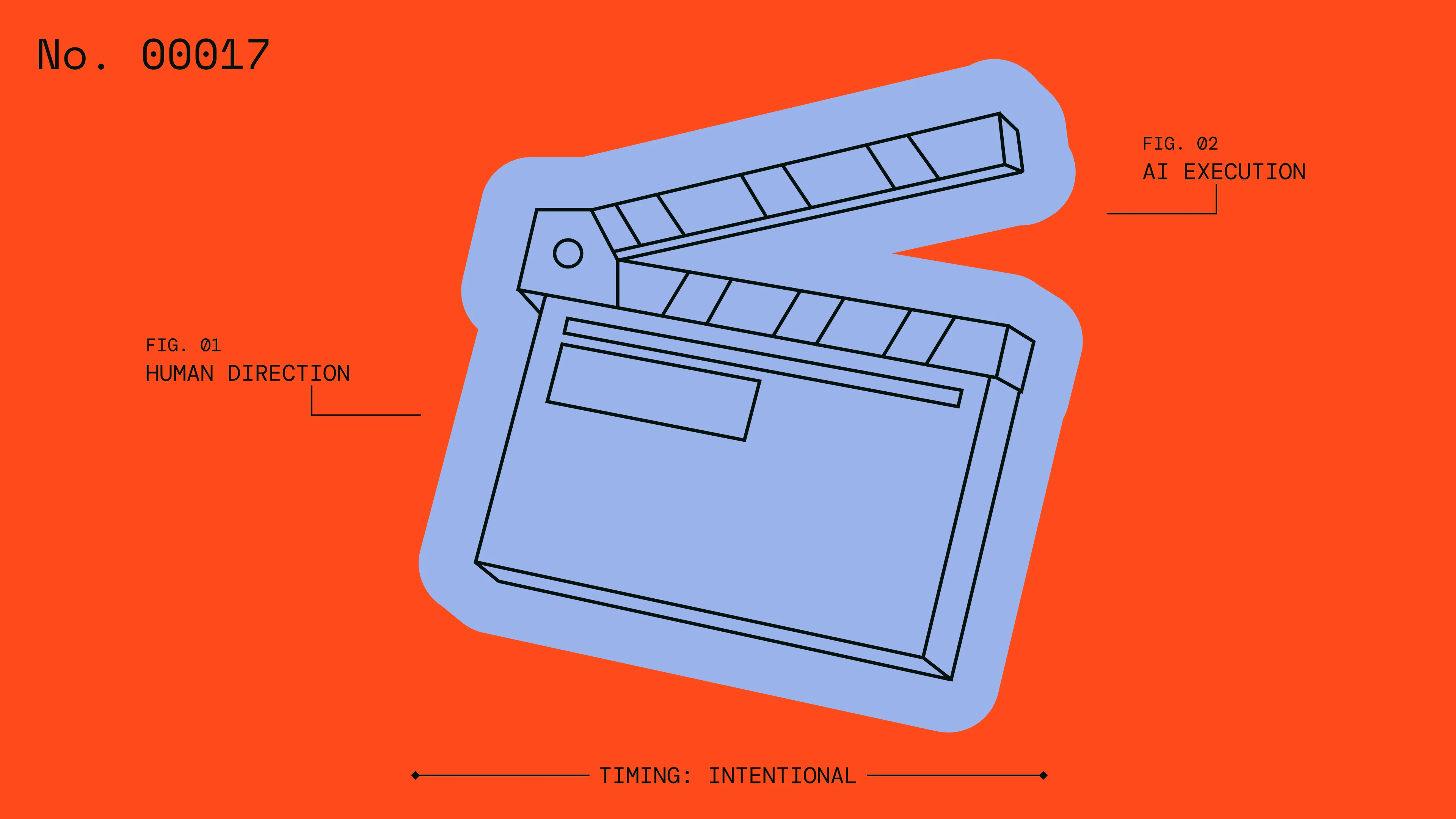
AI has become the thing everyone in the creative industry is either excited about or quietly anxious about. Often both at the same time. It's changed how fast we can produce work, and it's given back something we didn't expect: time. Time to actually think about the creative part instead of grinding through the technical one.
Key takeaways
- AI as an efficiency tool: AI takes on the repetitive technical work like rotoscoping, resizing, and troubleshooting, so designers can stay focused on the thinking.
- Human direction still does the heavy lifting: AI can generate visuals, but it has no idea why the timing should feel that way or what emotion is supposed to land.
- Execution is no longer the differentiator: As the technical side gets easier, taste and intent become the thing that actually separates good work from forgettable work.
- More room to experiment: Faster production means more chances to try things early, throw them out, and find better directions before you're too deep in.
Motion design has been right in the middle of all of it. We've felt the shift ourselves, and we hear it constantly from other videographers, editors, and designers we talk to.
The question that keeps surfacing is the same one: where does this leave us?
So much of what motion designers do is built on skills that take years to develop. When tools start handling parts of that work on their own, it's hard not to feel unsettled. That's a legitimate reaction. But staying stuck in resistance means missing something real that's opening up right now.
The role of human direction
Motion design, for us, has never really been about making things move. That's the surface of it. The actual work is about timing. It's about how something feels when someone watches it, not just whether it looks polished.
AI can generate clips, suggest edits, produce transitions, and even animate things without much input. And sometimes the results are surprising. But there's usually something missing when you look closely. It doesn't know why something should happen the way it does. It can't decide what a piece is trying to make someone feel. That part still comes from people.
What's shifting is the center of gravity in our role. Less time manually executing every frame, more time directing the whole system. Deciding what matters, what to cut, and how everything comes together into something that actually says something. That's not a smaller job for us, but it's a different one.
From production to exploration
The biggest change we've noticed in day-to-day work is just how much faster the production side moves now.
Tasks that used to eat up hours (sometimes full days) are handled in a fraction of the time. Rotoscoping, resizing, versioning, cleaning audio, and building out repetitive animations. Not always perfectly, but usually well enough to keep momentum going.
At first, skipping those steps felt strange. Like we were cutting corners on things we'd always done ourselves. But over time, we started noticing we had more space to actually think.
Here's where AI shows up in our process now:
- Putting together rough storyboards or visual directions quickly
- Exploring ideas before we've committed to a direction
- Generating scratch voice-overs just to test timing
- Building basic 3D elements or environments
- Extending or creating footage when something specific is needed
- Writing or fixing expressions and scripts in After Effects
- Troubleshooting technical problems that used to burn half a day
Instead of spending most of the time producing, we spend more of it exploring. Trying things. Throwing them out. Finding better directions earlier in the process. That shift has a real effect on what the work ends up being.
Creativity, refocused
Some of the discomfort comes from an honest realization: things that used to define our skillset are more accessible now. Basic animations, simple edits, certain effects, they're not as hard to pull off as they once were.
If execution gets easier, execution stops being the differentiator. What takes its place is taste and strategic thinking. Knowing what's worth making in the first place. Understanding how to make something actually connect with the person watching it. The question stops being how something is animated and becomes why it's being done that way at all. That's a harder thing to develop than technical skill, and it's also harder to replicate.
Where is this all heading
We won't pretend this transition is always easy. The pace of new tools, the constant sense that something just changed again, it's genuinely a lot to keep up with. But there's something rare about this moment, too. The way we create is being reshaped fast enough that new workflows are still being figured out. Standards haven't been set yet; there's actual room to experiment.
What's surprised us most is that these tools don't compress the creative process; they give us more room inside it. More room to think, to test ideas before they're locked in, to push things further than the production constraints used to allow. Less time proving we can execute, and more time focused on what makes the work worth watching.
We don't know exactly where it's all going. But the people who stay curious and actually lean into it, rather than waiting for the dust to settle, are usually the ones who end up shaping what comes next.

table of contents
Want more like this?
Subscribe to stay in the loop.
More content
Learn about other things on our mind
.webp)




.svg)